Your listeners know the value of letting go. Let them try it.
When I’m your guest, we can pause at any point in our conversation, and I’ll guide you, and everyone listening, through a short release on a negative thought or feeling that’s bothering them. No one has to believe anything. They simply notice whether they feel lighter.
Want to hear how I sound on a show? Watch a recent interview.

More than an interesting conversation
Most guests talk about change. Listeners enjoy the ideas, nod along, and by Tuesday they’re back in the same stuck feeling.
I’d like to give your audience something they can use. Releasing, the practice at the heart of the Release Technique, is a simple way to let go of an unwanted feeling by asking yourself a few questions and noticing what happens. In five to ten minutes, right on the air, your listeners can try it on a body, money, or relationship problem, or on anything else disturbing their peace.
No one shares private details. A sentence or two is plenty, and even that can stay general.
Afterward, each person checks their own experience. A little less agitated? A little lighter? A little clearer about what to do next? They decide.
Choose something small that’s bothering you.
- Annoyance with someone
- Worry about a decision
- Putting something off
- Fear of an upcoming event
- Stress about what you can’t control
- A body, money, or relationship problem
“A little lighter, a little quieter? That’s great. You’re moving in the right direction.”How I often close a release
What your listeners discover
Most of us handle an unwanted feeling in one of three ways: we analyze it, distract ourselves from it, or push it down. We try to understand why we’re anxious, angry, or putting something off. But understanding why a feeling is there doesn’t make it leave. Fighting it, ignoring it, or trying to figure it out holds it in place.
We also believe our feelings come from our problems. If we could just fix the money, the relationship, or the body, then we’d be happy. Releasing says we have it backwards. Let go of the feeling first, notice the peace and well-being that were underneath all along, and then take on the problem from there.
After the episode, your listeners may be better able to
- Notice when they’re resisting a feeling, and welcome it instead
- See the wanting of approval, control, or safety beneath a problem
- Let go of needing another person to change
- Take responsibility for their lives without blaming themselves
- Meet stress and uncertainty with more confidence
- Use a few simple releasing questions in everyday life
Putting the episode together is simple
I imagine you started your podcast to make a difference. You want an episode that’s relevant, practical, and real, one that leaves listeners more hopeful and gives them something to try after it ends. Here’s how we get there.
-
Tell me about your audience
Who you serve, what they’re facing, and what you’d like them to walk away with.
-
Choose the conversation
We pick a direction together: personal growth, relationships, meditation, spirituality, business, or releasing itself. We also decide whether to include a live release or a Releasing Card drawn on the air.
-
Give your listeners an experience
A warm, practical conversation, a few minutes of real letting go, and a free daily practice they can keep using after the episode ends.
How I came to releasing
In 2008, the financial crisis put the publishing company I’d started in 1985 in serious trouble. Years of practicing Transcendental Meditation had given me a great deal, yet I was anxious much of the time, trying to survive what looked like an impossible situation.
My wife encouraged me to take a Release Technique class. I wasn’t looking for anything new, but she was right more often than I cared to admit. So I went, and told her I’d keep using it only if it worked.
After that weekend I kept asking myself the simple releasing questions, and almost immediately I noticed a change. I became less attached to the business problems, quieter inside, and clearer about what to do next. The business didn’t become effortless, but it became easier, and we had some breakthroughs that felt like small miracles. Instead of closing, we laid the foundation for what my partners have built into today’s iPhone Life.
I’ve kept releasing ever since. I’m happier, seldom anxious, less dependent on other people’s approval, and more confident.
You don’t need to take my word for any of it. I can give you and your listeners a taste, and you can decide for yourselves.
Background
- Release Technique teacher since 2015, facilitator since 2013
- Hundreds of classes taught, thousands of releasers guided
- Author of The Releasing Book and Meditating Entrepreneurs
- Founder of the publishing company behind iPhone Life, in business since 1985
- Taught entrepreneurship at Maharishi International University for nine years
- Former Hewlett-Packard software engineer, social worker, and teacher of Transcendental Meditation
Conversation ideas
Choose one, combine a few, or bring your own question. Any of these can include a live release or a Releasing Card drawn on the air.
Why fighting a feeling keeps you stuck
Why analyzing, suppressing, or resisting an unwanted feeling keeps it around, and what your listeners can do instead.
Approval, control, and safety
The three wants underneath our problems, how they quietly shape our decisions and relationships, and the freedom of letting them go.
When you want someone else to change
A practical conversation about conflict and frustration, and the relief that comes when we stop trying to control another person.
From weeks to live to spiritual liberation in three months
The story of Lester Levenson, the engineer and entrepreneur who faced illness and death by investigating happiness, love, and responsibility, and whose discoveries became the foundation of releasing.
Six more conversation ideasShow fewer ideas
Can skeptics release?
How to test a spiritual or personal-growth practice from your own experience, without blind belief and without letting doubt close the door.
Meditation and releasing
Meditation opens the door to inner stillness. Releasing helps you find that stillness in the middle of an argument, a business decision, or an anxious moment.
Responsibility without self-blame
How owning our lives restores personal power when we see it as choice rather than condemnation, including owning the good we’ve created.
Why we hold on to fear
We sometimes keep fear because we believe it keeps us safe, alert, or prepared. What happens when we look at that directly?
Peace in the middle of financial uncertainty
For entrepreneurs, leaders, and anyone who has tied their happiness to an outcome, drawn from my own business’s close call in 2008.
200% of life: inner peace and outer success
Why you don’t have to choose between spiritual growth and material success. Stories from building a publishing company through decades of technological change, and why integrity and intuition turned out to be practical business assets.
For hosts: everything in one place
Open what you need. You’re welcome to use any of this to prepare and promote the episode.
Suggested introduction
If you’ve been carrying a relationship, money, or health problem that just won’t go away, today’s conversation may help.
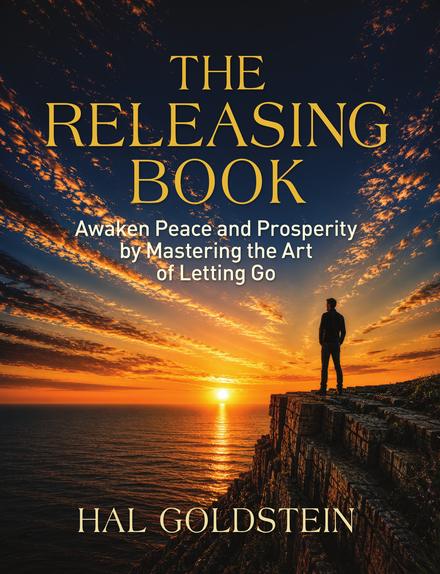
Our guest is Hal Goldstein, author of The Releasing Book: Awaken Peace and Prosperity by Mastering the Art of Letting Go, and Meditating Entrepreneurs: Creating Success from the Stillness Within.
Hal has been a Hewlett-Packard software engineer, a social worker, a meditation teacher, and a university entrepreneurship professor, and he founded the publishing company that today produces iPhoneLife.com. Since becoming a Release Technique teacher in 2015, he has taught hundreds of classes and guided thousands of people in letting go of emotional blocks and limiting beliefs.
Hal says this about releasing: you don’t need to believe anything. Try it, notice what happens, and decide from your own experience.
Welcome, Hal.
Short bio
Hal Goldstein is the author of The Releasing Book and Meditating Entrepreneurs. A former Hewlett-Packard software engineer, social worker, meditation teacher, and entrepreneurship professor, he founded the publishing company behind iPhone Life. Hal became a Release Technique teacher in 2015 and has since taught hundreds of classes and guided thousands of people toward greater peace, confidence, personal power, and freedom. He lives in Fairfield, Iowa.
Long bio
Hal Goldstein has spent his life exploring how practical work and inner development support each other.
He earned three master’s degrees in what he calls mind, heart, and spirit: computer science, social work, and interdisciplinary studies. He worked as a Hewlett-Packard software engineer, a social worker, and a teacher of Transcendental Meditation.
In 1984, Hal and his late wife, Rita, moved from Palo Alto, California, to Fairfield, Iowa. There Hal founded Thaddeus Computing, a publishing company that served mobile-technology users with magazines, software, education, and refurbished devices. The company went on to create iPhone Life magazine, today’s iPhoneLife.com. For nine years Hal also taught entrepreneurship at Maharishi International University.
Hal began practicing the Release Technique in 2008, during a difficult period for his business. He became a facilitator in 2013, and Larry Crane made him a Release Technique teacher in 2015. He has since taught hundreds of classes and worked with thousands of releasers.
He wrote The Releasing Book to help people understand and master releasing, and Meditating Entrepreneurs to share the stories of Fairfield entrepreneurs who built successful businesses while pursuing inner growth.
Hal doesn’t ask anyone to accept his conclusions. He invites them to release, notice what happens, and decide for themselves.
What happens during a live release
With your permission, I’ll guide you, a willing listener, or your whole audience through a release of five to ten minutes.
The person releasing picks something manageable and sums it up in fifteen or twenty seconds, in general terms. No private details are needed. From there we work with the thoughts, feelings, body sensations, and wants the problem stirs up. I may ask them to notice where a feeling shows up in the body, to welcome it rather than push it away, or to see whether wanting approval, control, or safety is involved. Then we pause and notice what’s different.
The person releasing stays in charge the whole time. Nothing is forced, and there’s no required result. The point isn’t to manufacture a dramatic podcast moment. It’s to help someone notice what’s true right now and discover they may have more choice than they realized.
Some people notice a clear shift the first time. For everyone, releasing becomes more effective with instruction and practice.
You and your listeners are the heart of the episode. My role is simply to ask the questions and guide the exploration.
Drawing a Releasing Card on the air
For a spontaneous segment, we can open today’s Releasing Card at releasingbook.com, or I can draw one at random from my card archive. Each card offers a releasing direction and a short guided audio. I can talk about the card, lead a release from it, or we can play the five-minute audio together.
It creates a natural moment of discovery. The card, not a prepared speech, decides where the conversation goes next.
Where your listeners can go next
One experience can open a door. Practice helps people walk through it. After the episode, your listeners can continue in three ways.
- A free Releasing Card every day. A short prompt and a five-minute guided release. Try today’s card at releasingbook.com
- The Releasing Book. A complete, readable guide to the five foundational releases, with guidance for relationships, business, health, and money, real coaching conversations, and a library of guided releases. In print, ebook, and audiobook. Explore The Releasing Book
- Release Technique classes. Live on Zoom, at retreats, or recorded. Releasing is simple to begin and, like music or carpentry, becomes more natural with good instruction and practice. Discount codes for classes
Hear Hal on other shows
- Power of Releasing PodcastHow Entrepreneurs Thrive Through Releasing
Business pressure, the wants for approval, control, and safety, and why a deceptively simple practice can create real inner change. - Writers’ Voices, with Monica HadleyThe Making of Meditating Entrepreneurs
Finding the essence of a story, entrepreneurial flexibility, technological change, and the growth of human consciousness. - Strategic Tech Coaching, with Oskar AndermoMeditation, Fairfield, and Meditating Entrepreneurs
Meditation, entrepreneurship, and the unusual business community that grew up in Fairfield, Iowa.
More recordings are available on request.
Photos and downloads
- Hal’s headshot, full size
- Background for your prep: Lester Levenson’s story from The Releasing Book, to listen or read
- Hal’s full About page
Need a high-resolution book cover, Releasing Card images, or another format? Email [email protected] and I’ll send them.
Let’s make an episode your listeners can experience
Your listeners don’t need another person telling them how they should feel. They may benefit from discovering they can welcome what they feel, let go of some of the struggle, and find the peace underneath.
Tell me about your show and your audience. Together we’ll choose the right direction for the conversation and decide whether to include a live release or a Releasing Card.
Or email [email protected], or call me at 641-472-1660.
I look forward to hearing from you.Hal
Releasing is presented for education and personal development. It is not medical or mental-health treatment and is not a substitute for care from a qualified professional.